
Finding Orland Park Residents
The best starting record depends on what is known. A current address belongs first in the correct county assessor or GIS system. A full name can be checked against recorded documents, court dockets, professional licenses, business filings, or older newspapers. A past address calls for a parcel number, legal description, deed chain, and historical sources. Orland Park spans Cook and Will counties, so the county is not a small detail. It determines the recorder, assessor, Circuit Clerk, election office, and county vital-records desk.
Official records answer narrow questions. An assessment card connects an owner or entity with a parcel. A deed index shows parties to a recorded instrument. A voter lookup checks a known set of identifiers. None supplies a complete household roster, and a tax mailing address does not prove where a person lives. Use at least two records with matching dates, counties, and addresses before treating a result as the right person.
- Place the address in CookViewer or Will County GIS and save the correct parcel identification number, or PIN.
- Open the matching county assessment and tax record, then separate the property location from the tax mailing address.
- Search recorded deeds by party, address, PIN, document type, and date. Keep the document number for copy requests.
- Cross-check a known person through the appropriate voter, court, business, license, or historical source.
- Send a narrow Illinois FOIA request to the actual custodian when a releasable record is not posted.
Orland Park Records Custodians
Orland Park resident records have several keepers. Cook County Clerk Recordings handles the former Recorder of Deeds function on the Cook side, while the Will County Recorder keeps the Will-side instrument index. Each county assessor supplies parcel and assessment data. Circuit Court Clerks hold court files, and County Clerks handle vital and election records. The Village Clerk is the custodian for Village documents not assigned to another officer. For an address-by-address method, use the Orland Park street directory.
Cook or Will County First
A postal address saying Orland Park does not identify the custodian. CookViewer maps Cook parcels and offers address, PIN, intersection, historical parcel, district, and nearby-search tools. Will County GIS carries parcels, address points, streets, municipal limits, townships, school districts, precincts, and aerial layers. Select the parcel polygon rather than relying on the first address-point hit. The resulting PIN leads to the assessment card and recorded documents.
This split matters beyond land records. Cook and Will have separate court gateways and vital-record desks. A person may also use an Orland Park mailing address while a nearby parcel falls outside incorporated Village limits. The Village incorporated in 1892 and later annexed outward, so older records may use Orland Township, a rural description, church name, or county legal description.
On the Cook side, the assessor address page asks for house number, street name without a suffix, city, and a CAPTCHA. A PIN search is available when the 14-digit number is already known. CookViewer then adds the map context and historical parcel layer. On the Will side, the Supervisor of Assessments offers six search methods, including owner, address, PIN, sales, subdivision, and property class. A partial street name can return several candidates, so compare the city, parcel shape, and legal description before moving to the Recorder.
Cook County's public case information page shows the access route and reminds users that the portal is not the official court file.
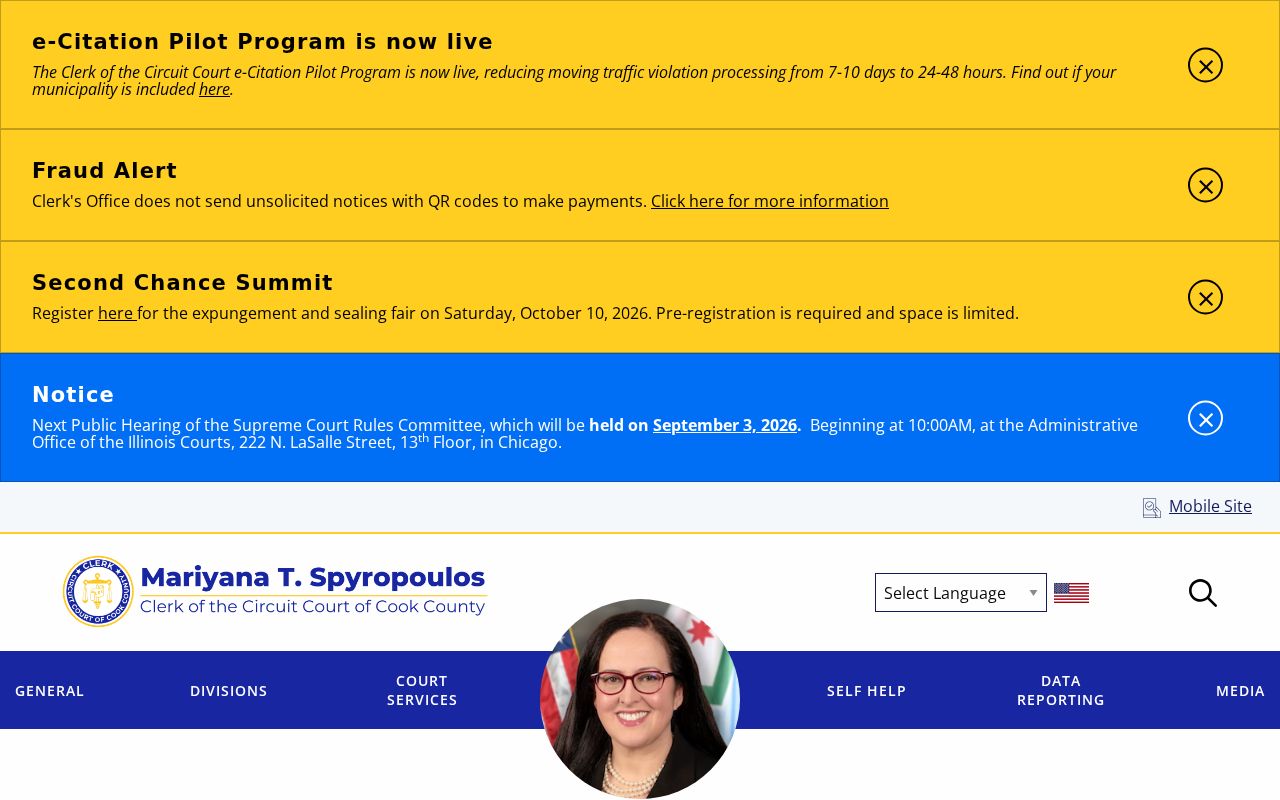
The screen is a gateway to a party search, while certified documents and restricted case material remain with the Circuit Court Clerk.
Will Recorder Name Trail
Will County has the clearest online land-history route serving Orland Park. The Recorder says documents are generally searchable online from 1965 forward. Earlier instruments may require the office, archive books, microfilm, or an order made with a document number. Direct Search accepts grantor and grantee names, addresses, PINs, date ranges, and document types. A grantor gives an interest; a grantee receives one. Search both roles and name variants.
Keep the document number, recording date, book and page, legal description, and instrument type. Those fields help distinguish two people with the same name and keep the chain on the right parcel. A deed party is not automatically an occupant. Trusts, estates, lenders, and business entities can appear as well.
- Index
- A searchable list of document facts. It may not include the recorded image.
- Legal description
- The lot, block, subdivision, or land description that identifies the parcel more precisely than a mailing address.
- Certified copy
- A custodian-issued copy carrying official certification. It is different from a screen print or downloaded index row.
When following ownership backward, take the grantor on the newest deed and search that person or entity as an earlier grantee. Confirm that the legal description remains consistent. A split, combination, condominium declaration, or new subdivision can change the PIN, so a name match alone is not enough.
Current Orland Park Directories
No current source lists every Orland Park household. Instead, each official roll describes a limited public relationship. Property sources list assessed parcels and owners. Recording indexes list parties to land documents. Court portals list parties to public cases. Election tools verify a known registration match rather than letting visitors browse a street. Public organization directories add a separate civic and business layer.
| Orland Park source | People or parties shown | Custodian | Public route |
|---|---|---|---|
| Assessment and tax records | Parcel owners or assessed entities | Cook or Will assessor | Free portal |
| Registration lookup | A known voter match | State Board and county clerks | Restricted single lookup |
| Recorded instruments | Grantors, grantees, and document parties | Cook Clerk or Will Recorder | Index; copies separate |
| Court docket | Public case parties and roles | Cook or Will Circuit Clerk | Portal or courthouse |
| Chamber directory | Participating firms and groups | Orland Park Area Chamber | Public member list |
The Orland Park Area Chamber directory can be searched by category and ZIP and displays active member results. It is useful for a public business or civic affiliation, not a household. For identity matching across official sources, follow the Orland Park resident lookup workflow.
The Chamber member directory shows the public category and search controls.
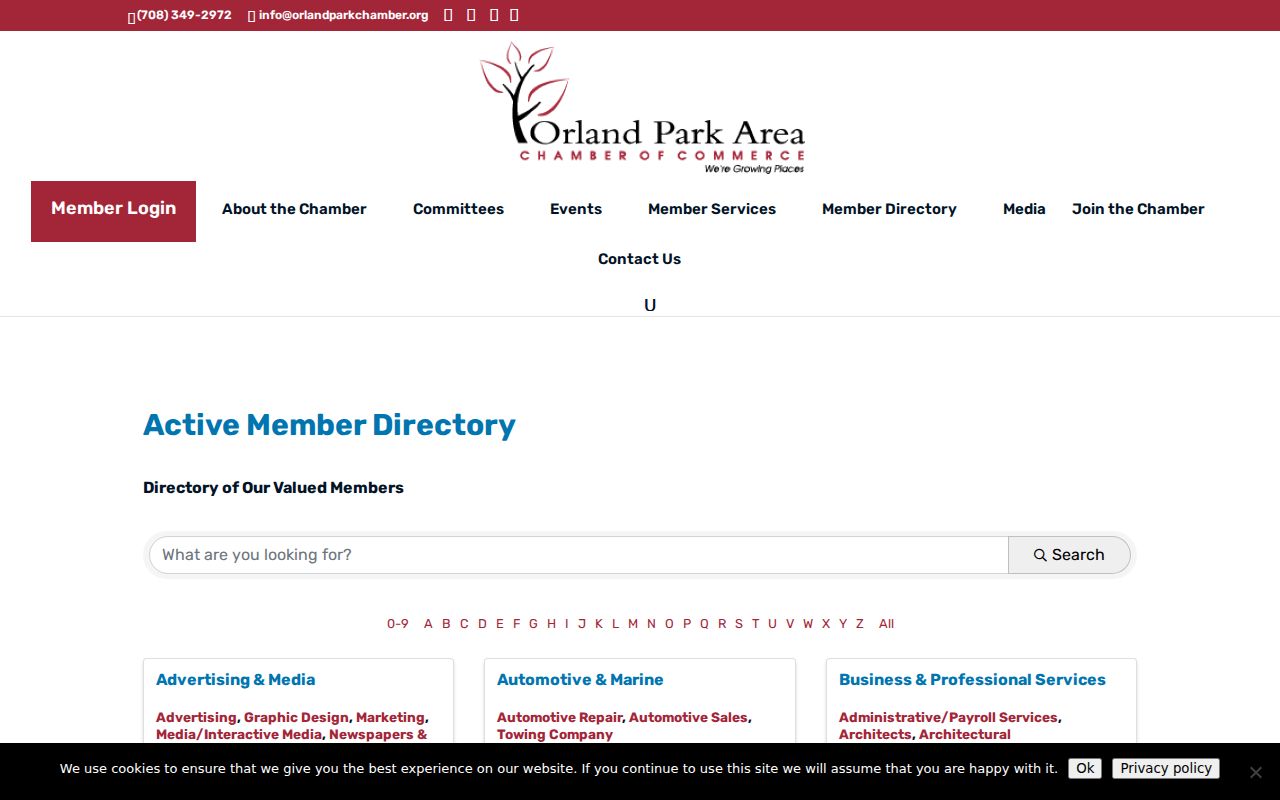
Its entries represent organizations that chose to participate, so they should not be read as an official Village roll.
Illinois Voter Match Limits
The Illinois State Board of Elections lookup asks for first and last name, birth date, five-digit ZIP, street number, and a street name chosen after the ZIP step. Those required fields make the tool useful for checking a record already believed to belong to one person. They do not create a public Orland Park street roster. A nonmatch can reflect an inactive record, a recent move, formatting, list maintenance, or a protected address.
Illinois law restricts voter-file disclosure and use under 10 ILCS 5/1A-25. The released statewide data no longer includes dates of birth. Illinois also does not use permanent party registration in the usual sense, so a ballot choice should never be described as a resident's standing party registration.
Cook suburban voters use County Clerk routes for registration and polling information. Will County operates a separate form asking for first name, last name, date of birth, house number, and a dynamically selected street. The captured form did not expose a ZIP field or its result panel. Do not claim that it returns a full address or voting history. County election offices can correct a registration; repeated guesses against a protected or mismatched record are not a proper workaround.
Orland Park Court Cross-Checks
Cook County Odyssey and Will County iPublic can help separate same-name residents when a case number, filing date, party role, or county matches another record. Search results are docket summaries, not proof of the underlying allegation or final outcome. Verify the disposition and inspect the official file when the fact matters. Juvenile, adoption, sealed, impounded, and expunged material may be unavailable.
The Will County case-search gateway requires acceptance of terms and an emailed security code.
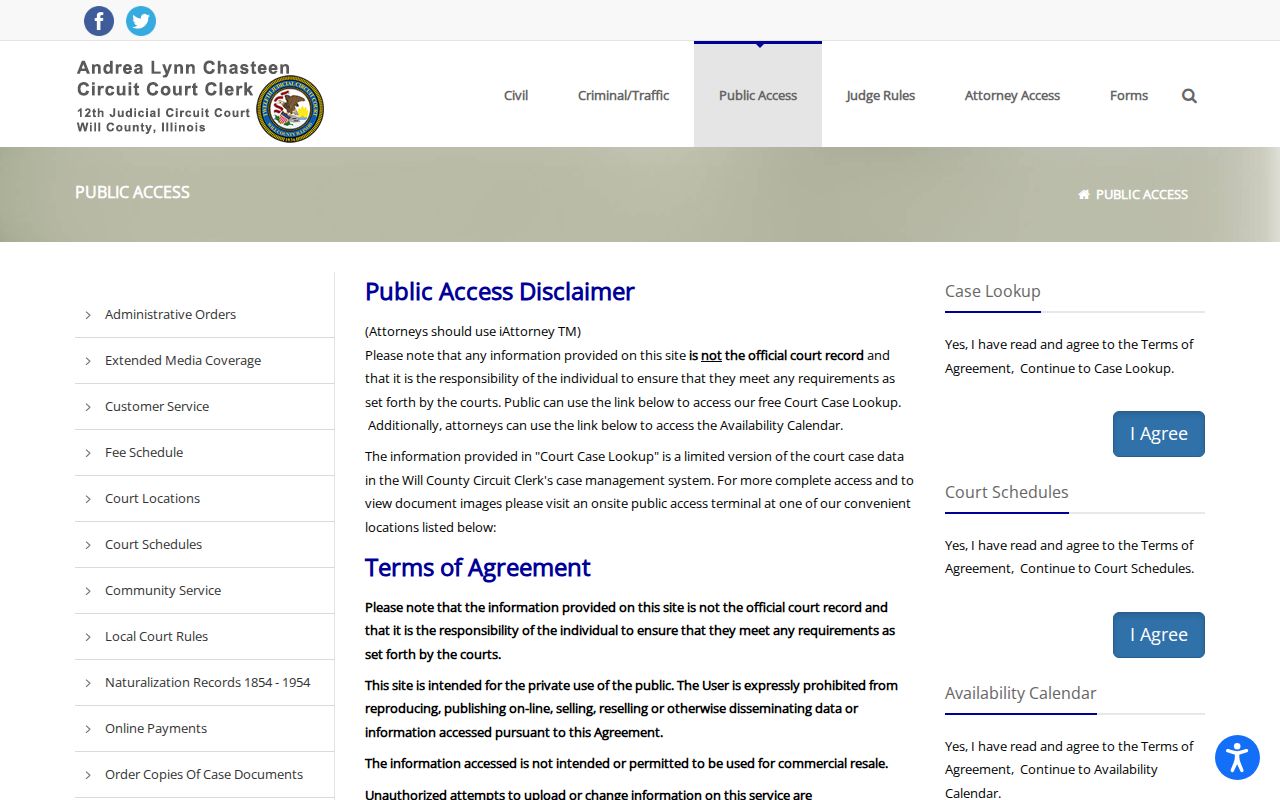
The gate explains why a failed automated search should not be mistaken for the absence of a court record.
Orland Park Library Evidence
The Orland Park Public Library offers Ancestry Library Edition, HeritageQuest, FamilySearch access, regional newspapers, yearbooks, local-history books, and help from Adult Services. Newspaper coverage includes long runs of Chicago and suburban titles, while local yearbooks can tie a classmate to a school and year. The Heritage Sites collection adds photographs, maps, family material, and Old Orland history by appointment.
These sources work best as corroboration. A yearbook shows a school-year association. An obituary may name relatives and a place at one date. A newspaper address can be old or affected by optical-character-recognition errors. Compare the original page with a deed, census, vital index, or court record before joining two identities.
The South Suburban Genealogical and Historical Society is another strong regional stop because its scope covers south Cook and east Will, including Orland Township. Its Hazel Crest library reports more than 14,000 books and periodicals, a FamilySearch Affiliate relationship, and research help. The Illinois Regional Archives Depository system can hold transferred county land, tax, poll, naturalization, and probate material. Ask staff to confirm a series and year before ordering research.
Illinois Records Request Route
The Illinois Freedom of Information Act, 5 ILCS 140/1-11, is the fallback for releasable government records that are not already online. Direct the request to the office that created or keeps the item. The Village Clerk handles many municipal files, Development Services handles permit and historic-district material, and county departments answer for their own parcel or administrative records. Court files, certified vital records, and recorded-document copies use their dedicated clerk procedures instead of a general FOIA request.
Describe the date range, address or PIN, document type, and preferred electronic format. Narrow wording reduces the chance that staff must seek clarification. The Illinois FOIA overview provides the statewide framework.
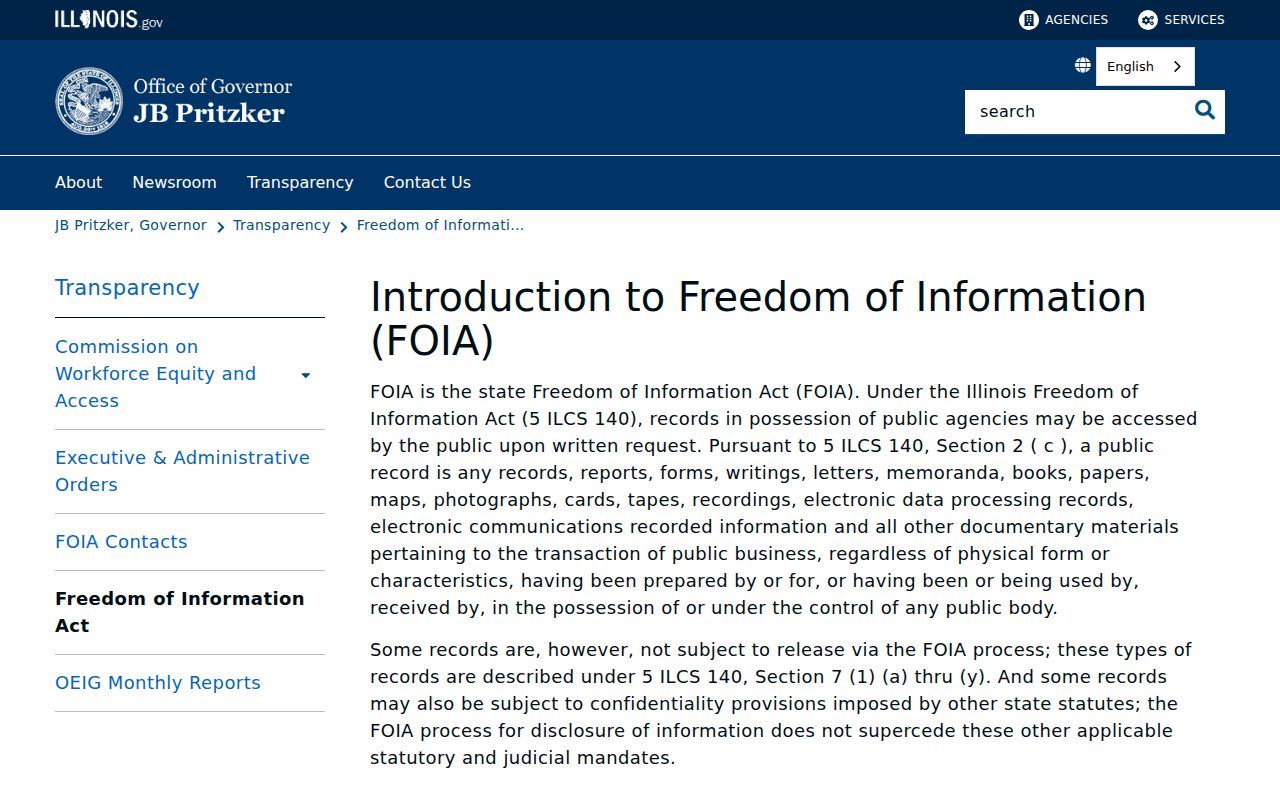
The public guide is a starting point; exemptions and other confidentiality laws still control what a custodian may release.
Names Beyond Property Records
A person who never appears as a parcel owner may still leave a lawful public trail. Illinois professional-license records can confirm a name, license type, status, and update date. The Secretary of State business search can show an officer, manager, or registered agent. I-CASH lists a name with city or ZIP for unclaimed property, while keeping claim documents private until an heir or owner proves entitlement. Probate dockets and obituaries can connect an estate with a last deed.
Custody and offender systems answer only their specific safety questions. County jail rosters, the Illinois Department of Corrections search, and the State Police registry are date-sensitive and incomplete as general identity tools. An absent result proves little. Never use any public record to stalk, threaten, or harass a person.
The Illinois custody search landing page illustrates this separate, system-specific layer.
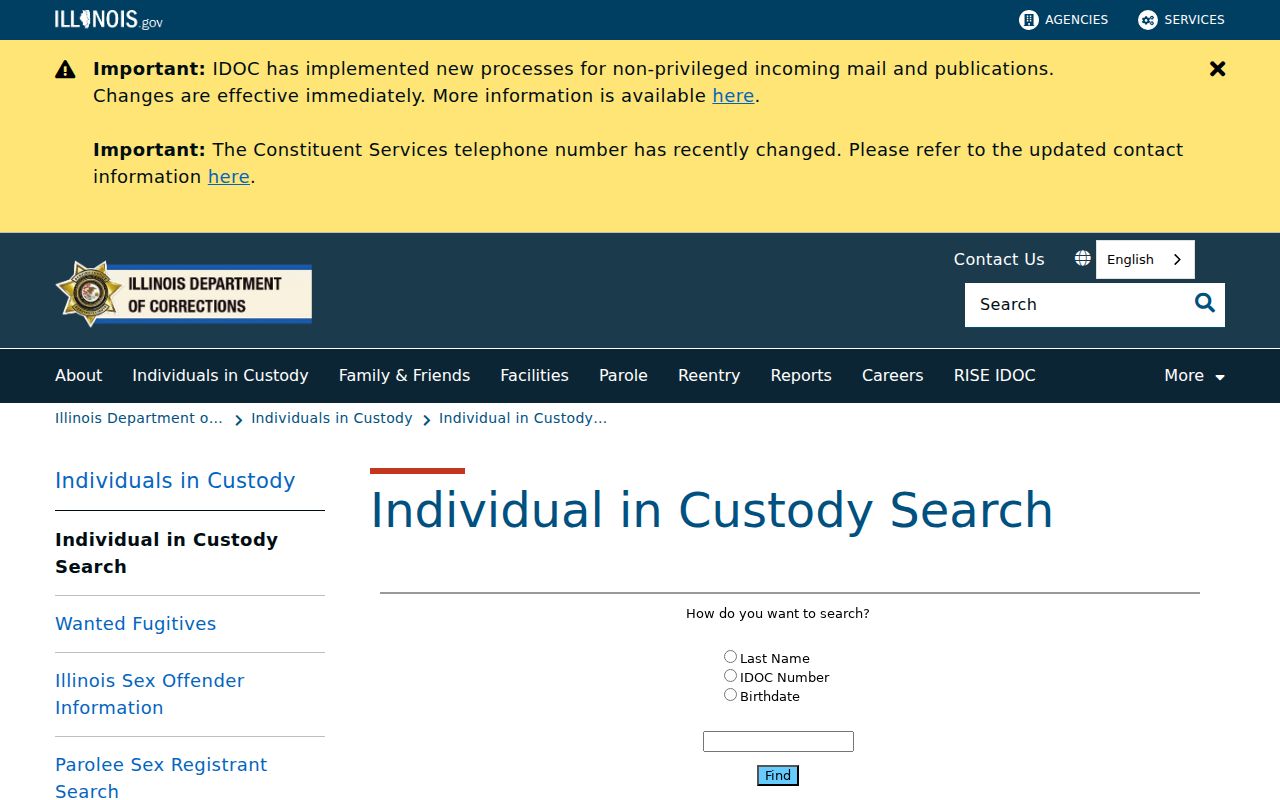
County custody, state custody, court cases, and registries are different records and should never be merged into one conclusion.
Orland Park Privacy Boundaries
Illinois protects more than sealed court files and current vital certificates. Driver-record address data is restricted under 625 ILCS 5/2-123. The Attorney General's Address Confidentiality Program provides a substitute address for eligible survivors under 750 ILCS 61. Protected voters may therefore appear differently in election systems, and a public search must not be used to defeat that protection.
Use records lawfully. Public access does not authorize stalking, repeated unwanted contact, intimidation, or publishing a protected address.
Commercial people-finder compilations may merge same-name people or keep stale addresses. An official index also has limits, but it identifies its custodian, record type, and date. Use primary records, keep the smallest amount of personal data needed, and send corrections to the office that controls the source.
Current vital certificates show the same boundary in a different form. Cook or Will County Clerks and the Illinois Department of Public Health require eligibility, identification, and fees for certified copies. Genealogy access opens later under Illinois rules. Birth records generally reach the genealogy exception at 75 years and death records at 20 years, while Cook's genealogy guidance uses 50 years for marriage records. Older originals may transfer to the State Archives or IRAD. A genealogy index can support a family link, but it is not a source for publishing a living person's current address.
Historical Orland Park Directories
Orland Park's historical path is broader than one confirmed run of printed city directories. The library's 1999 local-history profile said suburban directories, Haines material, telephone books, yearbooks, family histories, and newspapers were available, but the current online pages do not publish a volume-by-volume Orland Park year list. Confirm the actual shelf and year before planning a visit or paying for research. The Orland Park city directory collections page explains that gap and the regional alternatives.
Federal census schedules through 1950, older Cook and Will land records, church and cemetery material, newspaper archives, and the South Suburban Genealogical and Historical Society can bridge years. Orland's pre-incorporation history also matters. A nineteenth-century family may be indexed under Orland Township or a rural legal description rather than the later Village name.